
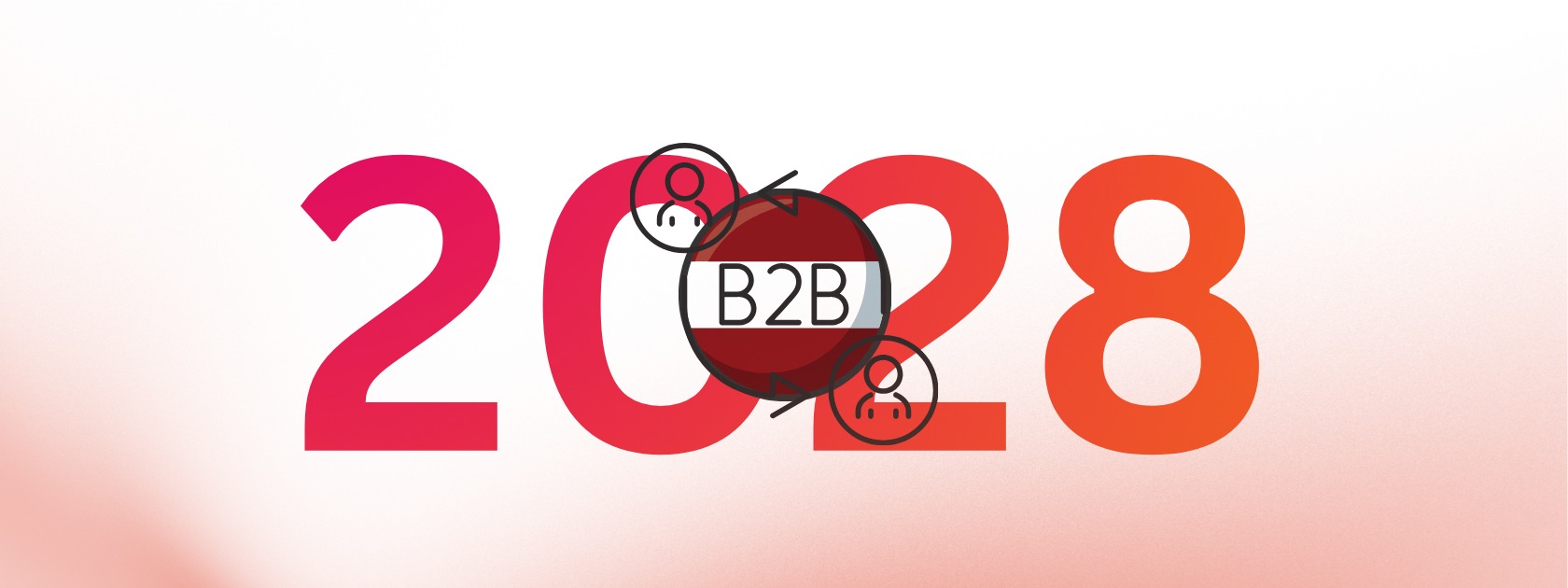
1 January 2028 is more than a date in the accounting calendar
From 1 January 2028, a company registered in Latvia will have to issue every sales invoice to another Latvian company as a structured e-invoice, and send that invoice data to the State Revenue Service (VID). That is two obligations riding on a single invoice: the machine-readable document goes to your partner, and a copy goes to the tax authority. Before that, through 2026 and 2027, sending the data to the VID is voluntary. And that window is exactly the part worth using.
In this article:
Two extra years, not a reprieve
The obligation sits in the Latvian Accounting Law (Grāmatvedības likums), whose amendments — adopted on 5 June 2025 and in force from 12 June 2025 — pushed the start of the private-sector B2B duty back. The original deadline was 1 January 2026; it is now 1 January 2028. The distinction matters: the delay handed companies two extra years, but it did not cancel the obligation itself.
The system is already live
This is where the most common confusion starts. Latvia’s e-invoicing system does not switch on in 2028. It is already running — just with other parties. 2028 is simply the date the circle reaches invoices between private companies. Anyone who mixes up “e-invoices are already mandatory” with “this doesn’t touch us yet” is wrong on both counts.
Which invoices does the obligation actually cover?
Both parties, not company size
The duty is tied to the type of transaction, not to the size of the company. The Latvian Accounting Law sets no turnover threshold and no VAT-registration threshold. Whether an invoice must be a structured e-invoice depends on who the parties to the transaction are. The subjects of the law include commercial companies, cooperatives, branches and permanent establishments of foreign traders, associations and foundations, sole traders, and natural persons carrying out economic activity.
What decides it is that both parties to the transaction are registered subjects of the law in Latvia. So the great majority of ordinary business invoices from one Latvian firm to another fall under the rule — whether it is a two-person limited company or a large group.
What’s already mandatory
Some invoices have been e-invoices for a while already. Since 1 January 2025, invoices submitted to state bodies — budget institutions — must be issued as e-invoices; that is the B2G, G2G and G2B segment. Where a contract with a budget institution was signed before 31 December 2024, transitional provisions allowed the obligation to apply from 1 January 2026 at the latest. And from 1 January 2026, according to the VID’s own explanation, sending the e-invoice data for those same segments to the tax authority is mandatory.
Invoicing between private companies — B2B — joins on 1 January 2028. A business can already send B2B e-invoice data to the VID voluntarily: Latvian Cabinet Regulation No. 749 opened that option from 1 January 2026.
What stays outside
Invoices to private consumers (B2C) are not covered, and no automatic obligation arises towards a foreign partner. According to the European Commission’s overview, Latvia has no B2C mandate. You may issue a structured e-invoice to a company registered abroad if both sides agree to it, but it is not required.
Not a ViDA deadline
And here is a second frequent misreading. Latvia’s 2028 date is a national rule, not a deadline from the EU’s ViDA directive (2025/516). ViDA was adopted on 11 March 2025, and its requirements for cross-border B2B digital VAT reporting only start to apply from 1 July 2030. Two different things, two different dates.
What does “structured format” mean, and why won’t a PDF do?
Picture versus spreadsheet
A PDF sent by email is not an e-invoice, however tidy it looks and however correct its numbers are. The law defines a structured e-invoice as an invoice that is issued, sent and received in a structured format that can be processed automatically and electronically, and that meets the European standard LVS EN 16931-1:2017. The operative word is machine-readable: the data moves from one accounting program straight into another, with nobody retyping numbers by hand.
The easiest comparison is a picture versus a spreadsheet. A PDF is like a photograph of an invoice — a person reads it with their eyes, but the software sees only an image. XML is the spreadsheet itself, where every field — supplier, amount, VAT rate, due date — is separately readable and processable by a machine. That gap is precisely what the 2028 requirement is about.
The format the VID expects
In practice this means an XML file (Extensible Markup Language, a structured data format). The VID specifies that the file’s XML structure must conform to the PEPPOL BIS Billing 3.0 specification — an international e-invoicing rulebook. Regulation No. 749 adds that the VID receives and stores e-invoices without attachments, and that their structure must meet UBL 2.1 (a universal XML-based document format) and PEPPOL BIS Billing 3.0.
Validate before you send
Check the XML before you send it. The VID recommends using the European Commission’s e-invoice validation tool to confirm that a file meets both the technical and the content requirements — data structure, mandatory fields, and the correctness of the calculations. The VID page has a separate guide for this, with tips on spotting errors quickly.
Does everything have to go through Peppol?
The common assumption is that everything must run through Peppol. It doesn’t. Regulation No. 749 lets the parties choose the delivery channel: the official electronic address (e-adrese), an operator’s channel, or another channel — including a system-to-system integration or plain email. The parties agree between themselves which channel, or channels, they use.
One nuance matters. The choice of channel does not change the format requirement. Even if the invoice reaches your partner by email, the attachment has to be a structured XML invoice, not a PDF. The agreement is about the road, not about the cargo.
And two actions that are easily conflated need to be kept apart: sending the invoice to the recipient, and submitting the invoice data to the VID. The first is a commercial step between partners; the second is an obligation towards the tax authority. The same invoice passes through both, but they are separate processes with separate deadlines.
How and when does the tax authority get its copy?
Five working days
E-invoice data must be submitted to the VID once, no later than five working days from the day the invoice is sent. Point 14 of Regulation No. 749 sets that deadline unambiguously.
Three routes in
There is more than one route in. The VID explains that the data reaches the tax authority via the electronic address, via an e-invoicing service provider — an operator — or submitted directly by the company itself. The regulation names three channels: the official electronic address; an operator channel integrated with the VID system’s API (application programming interface); and the VID’s Electronic Declaration System (EDS), either via its API or by file upload.
Anyone uploading a file manually into EDS has to reckon with technical limits. The VID EDS guide, added on 23 March 2026, requires the uploaded file to be in XML format compliant with PEPPOL BIS 3.0, and caps a single e-invoice at 20 MB.
When systems fail
Systems can fail, and there are rules for that. If a fault in the company’s or the operator’s information system prevents timely submission, the regulation says you must report it in EDS no later than the working day after the deadline passes, and submit the invoice within three working days of the fault being fixed. If the delay is not caused by a system fault, you note the reason and the period in EDS and submit the outstanding e-invoices within 30 calendar days of identifying the cause.
What to have done by the end of 2027
The voluntary period in 2026–2027 exists so that January 2028 doesn’t turn into manual firefighting. A sensible order looks like this:
- Map your invoice flows. Look at who your company sends B2B invoices to and in which segments: how many go to Latvian private companies, how many to budget institutions, how many to private consumers and abroad. That shows how large a share of your invoices 2028 actually touches.
- Clean up your customer and product data. A structured invoice needs correct particulars: registration codes, VAT numbers, units, prices, tax rates. A machine-readable invoice does not forgive sloppy data the way a PDF quietly does.
- Choose a delivery channel and agree it with partners. The choice between the electronic address, an operator, or an integration depends on your invoice volumes and on what your partners already use.
- Test the XML. Build a structured e-invoice and run it through the validation checks to see whether the mandatory fields and calculations hold up.
- Try submitting to the VID voluntarily. 2026 and 2027 are there for exactly this. Better to find the glitches while a delay carries no consequences.
- Agree who is responsible, between your accountant and your IT partner. Who issues, who submits to the VID, who watches the five-working-day deadline, and who acts when there’s a fault — those roles need to be clear before 1 January 2028, not after.
A company that has worked through these steps by the end of 2027 will meet January 2028 as an ordinary working day — not as a deadline to sprint towards.
Also available in: eesti keeles · latviski
Last reviewed:
Millal jõustub Läti B2B e-arvete kohustus?
Alates 1. jaanuarist 2028 peavad kõik Läti ettevõtetevahelised B2B-arved olema struktureeritud e-arved ja nende andmed tuleb edastada Läti maksuametile (VID).
Kas PDF-arve sobib e-arvete nõude täitmiseks?
Ei. PDF ei ole masinloetav ega vasta struktureeritud e-arve nõuetele. Arve peab olema XML-formaadis, mis vastab PEPPOL BIS Billing 3.0 standardile ja Euroopa standardile LVS EN 16931-1:2017.
Kas kõik e-arved peavad liikuma PEPPOLi kaudu?
Ei. Pooled võivad kokku leppida mis tahes edastuskanalis – e-post, operaator, otseühendus. Oluline on, et arve ise oleks struktureeritud XML-vormingus, mitte et see liiguks kindlat teed pidi.
Mis vahe on Läti B2B kohustusel ja ELi ViDA direktiivil?
Läti 2028. aasta nõue on riigisisene regulatsioon. ELi ViDA direktiivi (2025/516) piiriülese B2B digitaalse käibemaksuaruandluse nõuded hakkavad kehtima alles alates 1. juulist 2030. Need on kaks erinevat tähtaega.