Most companies think of year-end as a December problem. By then it’s already too late to fix anything — you’re just working through whatever has piled up, and the fix gets postponed to next year. Which, let’s be honest, is what happened last year too.
The real squeeze starts with Q4, and it comes from two directions at once. Purchase invoice volume goes up: budgets get spent down before they reset, IT and marketing buy on autumn software and hardware deals, procurement stocks up ahead of the holidays, and year-end events and client gifts generate a wave of receipts. At the same time, the people who approve those invoices start disappearing. From mid-December the office empties out one person at a time, and an invoice usually needs one specific approver, not just anyone with a login.
So the pile grows while the capacity to clear it shrinks. Every invoice still in someone’s inbox when they leave for the holidays becomes a problem that belongs to this financial year but gets solved in the next one.
What to fix now, while there’s still time
Get invoices arriving in one place, not in individual inboxes. An invoice sitting in a colleague’s personal email is invisible. Nobody knows it exists until the supplier calls — and by then it’s late, unapproved and possibly in the wrong period.
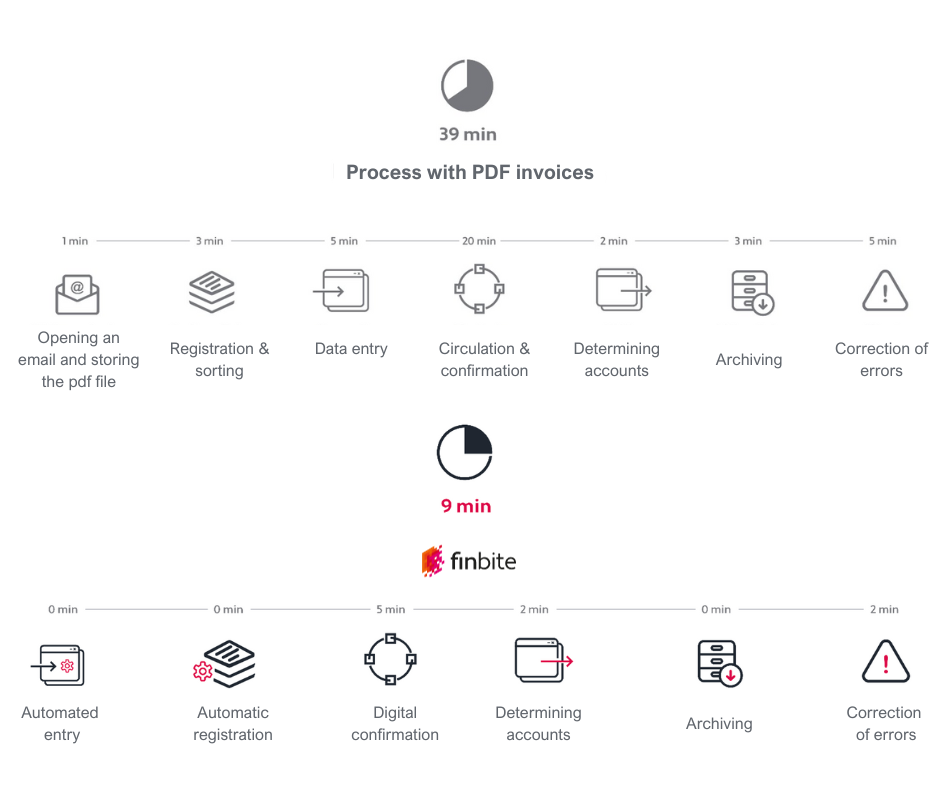
This is the step everything else depends on. Approval workflows, automatic account assignment, sending to your ERP — none of it works on a PDF attachment that only one person can see. The data has to be machine-readable first.
→ Digitisation turns PDF and paper invoices into structured data with a 99% quality guarantee, so invoices from suppliers who don’t send e-invoices still enter the same automated flow as the ones who do. In practice that means every purchase invoice — e-invoice, Peppol, emailed PDF or paper — lands in one queue in the same format, and your accountant stops retyping.
→ For suppliers outside your home market, Peppol is how their invoices reach you as structured data rather than as an attachment. Finbite connects you to the Peppol network without you needing your own access point — it has been a Baltic e-invoice operator for more than a decade.
Set up approval substitutes before people leave, not after. The substitute should be named by the approver themselves, while they’re still at their desk. Doing it that way keeps the control intact — the right person decided who takes over their authority. Doing it after they’ve gone means someone in finance is improvising with other people’s approval rights during the busiest week of the year.
→ The digital confirmation circle lets approvals happen from any device, so being out of the office doesn’t have to mean being out of the process. You can also set approval limits by amount and check at any point who approved what and when.
Get your recurring suppliers assigned automatically. Rent, phone bills, software subscriptions, cleaning services — the accounts and dimensions are identical every month, and filling them in by hand in December is a waste of the one person whose time you need most. Let the routine handle itself so people only deal with the exceptions.
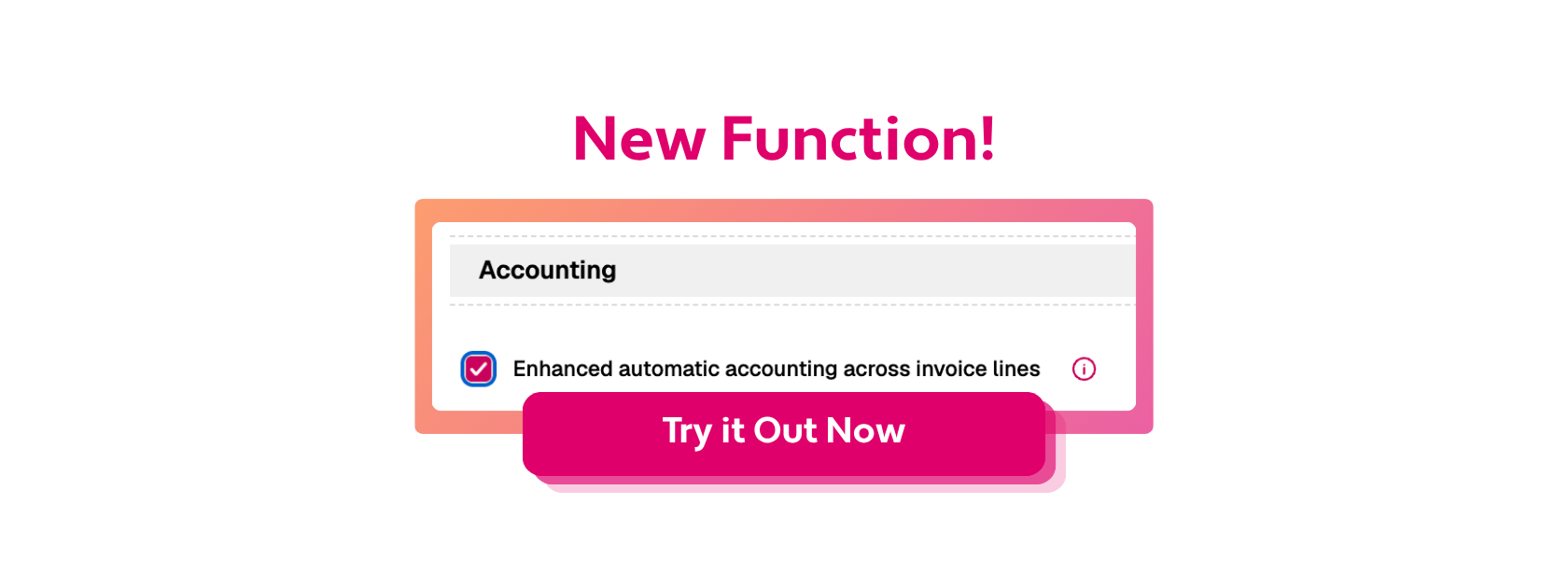
→ Finbite offers two ways to do this. Account assignment templates let you define the accounts and dimensions per supplier or category. And the new automatic account assignment for invoice lines needs no template at all — it learns from how you’ve assigned accounts on that supplier’s invoices before and fills in the account and dimension fields itself, line by line, matching lines by their description rather than their position on the invoice. Existing templates stay in force and won’t be overwritten. Available on Standard and Premium plans, and switching it on takes one tick in the purchase invoice settings.
Set an internal cut-off for expense reports. Employees hold onto receipts and submit them all in January, which pushes costs into the wrong period and creates an avoidable pile at the worst moment. Give people a date, tell them well in advance, and make submitting easy enough that the date is realistic — photographing a receipt on the spot rather than keeping a shoebox until the deadline.
→ With the Finbite app, employees photograph a receipt as soon as they get it and build the expense report from it. The report goes to the accountant and manager for approval before reimbursement, and everything stays in the digital archive.
Make the openprocess visible to someone who can act on it. Not a list of numbers in a report nobody opens. Someone needs to see which invoices are stuck, how long they’ve been stuck, and who they’re waiting on — and the chasing shouldn’t depend on one person remembering to do it.
→ Every invoice waiting for approval is visible in the system, and automatic reminders go out to anyone who has not yet confirmed an invoice or an expense report. Reports on purchase invoices, approvers and representation rights give the full picture of where things are sitting.
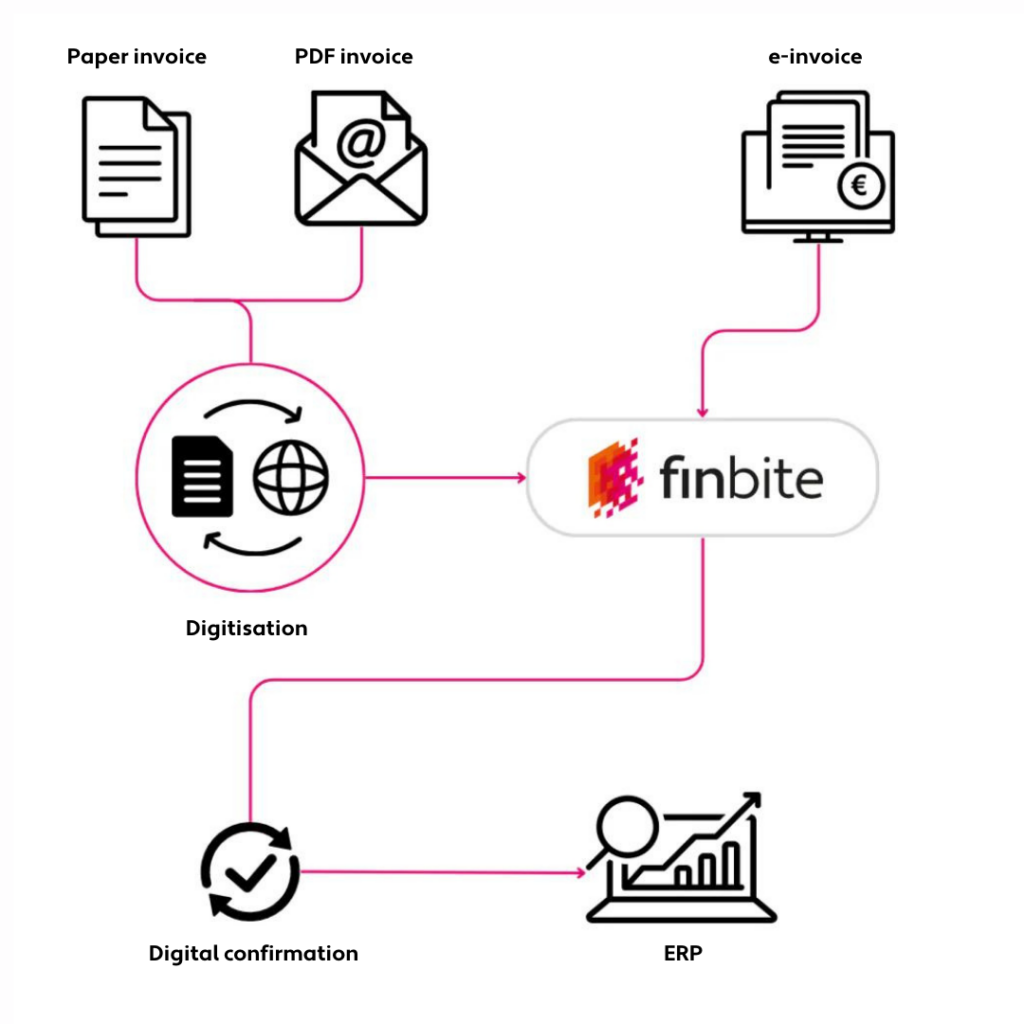
Check what your customers need from you on the sales side too. If any of them have moved to e-invoicing or changed the format they accept, December is a bad month to find out.
→ Sales invoices can go out in whichever format the recipient expects — e-invoice, Peppol, PDF or paper — from one place. Worth knowing that this is moving: European B2B invoices must be structured e-invoices from 2030, and customers tend to ask before the law does.
Why now and not in December
Every item on that list takes an afternoon. None of them can be done under pressure. Setting up account assignment needs someone to think about which suppliers are actually recurring. Approval substitutes need a conversation with each approver. A cut-off date for expenses only works if people hear about it weeks ahead.
Do them now and December runs itself. Leave them until December and you’ll do all of them badly while also trying to close the year.
How Finbite helps
Finbite brings purchase invoices, approvals, account assignment and expense reports into one environment. E-invoices and digitised PDF invoices arrive automatically, approvals run by email or mobile so nobody has to be at their desk, and processed invoices go straight into your accounting software through ERP integrations. The platform saves up to 30 minutes and €3 on each invoice.
More than 5,000 companies across Estonia, Latvia and Lithuania use Finbite. Try the interactive demo or book a consultation.